
Wet Stacking: What It Is and How to Prevent It
A standby generator has one job: to start and take the load the moment the mains supply fails. For many sites, though, the generator spends almost all of its life switched off, or running for short periods with little or no load connected. That pattern of use can quietly damage a diesel engine through a condition known as wet stacking – and the damage often goes unnoticed until the day the generator is actually needed.
This article explains what wet stacking is, what causes it, the warning signs to look out for, and the practical steps facilities managers and generator owners can take to prevent it.
What is Wet Stacking?
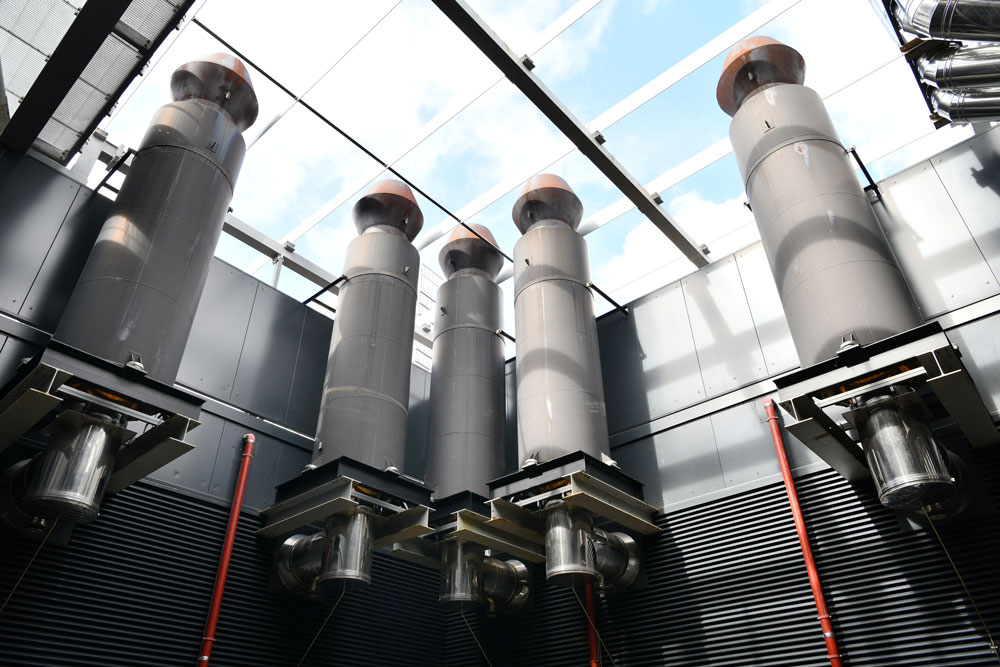
Wet stacking is the build-up of unburnt fuel, soot and oily residue in a diesel engine’s exhaust system. It gets its name from the wet, black, tar-like deposits that collect in the exhaust “stack” and often seep out of joints in the manifold, turbocharger and pipework.
Diesel engines rely on heat and pressure to ignite their fuel. They are designed to run efficiently under a reasonable load, where cylinder temperatures are high enough for the fuel to burn completely. When an engine runs too lightly loaded, or too cold, combustion is incomplete. Some of the injected fuel passes through the engine unburnt and condenses in the cooler parts of the exhaust, along with carbon and lubricating oil.
Over time these deposits accumulate. They reduce performance, increase wear and, in the worst cases, create a serious fire risk.
What causes it?
Wet stacking is almost always the result of how a generator is used rather than a fault in the machine itself. The most common causes are:
- Running at light load for long periods. Most diesel generators need to run at a meaningful proportion of their rated output – manufacturers commonly cite at least 30–40% – to reach proper operating temperature. A generator that only ever powers a fraction of that will never get hot enough to burn its fuel cleanly.
- Off-load test runs. Routine weekly or monthly runs are good practice, but if the generator is simply started and left idling with nothing connected, each run adds to the problem rather than solving it.
- Oversized generators. A generator specified with generous headroom for future expansion, or for a peak load that rarely occurs, may spend its whole life lightly loaded.
- Extended idling. Leaving an engine to idle for long periods during warm-up, cool-down or commissioning has the same effect as light-load running.
- Repeated failed start attempts. Each time an engine is cranked, fuel is injected into the cylinders. If the engine does not fire, that fuel is not burnt and can collect in the cylinders and exhaust. Repeatedly cranking an engine that will not start – without first finding out why – can allow a significant amount of fuel to build up.
- Cold operating conditions. Low ambient temperatures, short run times and cooling systems that keep the engine below its ideal temperature all make complete combustion harder.
Warning signs to look out for
Wet stacking develops gradually, so it pays to know what to look for during routine checks:
- Black, oily or tar-like residue around exhaust manifold joints, the turbocharger or flexible exhaust sections
- Dripping or weeping from the exhaust outlet or rain cap
- Persistent black, blue or white smoke, particularly when the engine is first loaded
- A noticeable “sooty” or raw diesel smell around the generator
- Higher than expected fuel consumption
- Sluggish response or difficulty picking up load
- Rising oil level, which can indicate fuel diluting the engine oil
If any of these are present, the generator should be inspected before it is relied upon in an emergency.
Why it matters
Left unchecked, wet stacking can lead to:
- Exhaust fires and explosions. Accumulated fuel and oil in the exhaust can ignite once the engine finally fires or is put under heavy load. The sudden combustion of a build-up of unburnt fuel can rupture exhaust pipework and flues, damage surrounding equipment and put people at risk.
- Engine damage. Carbon deposits foul injectors, valves and turbochargers. Low-temperature running can glaze cylinder bores, stopping piston rings from sealing properly, which in turn increases oil consumption and blow-by. Fuel washing past the rings dilutes the lubricating oil and accelerates wear.
- Reduced capacity. A wet-stacked engine may struggle to deliver its full rated output – exactly when a site needs it most.
- Higher running costs and emissions. Poor combustion wastes fuel, increases smoke and emissions, and shortens service intervals and engine life.
The frustrating part is that a generator affected by wet stacking can appear perfectly healthy during an off-load test run. It starts, it runs, the test is signed off. The problem only reveals itself when the engine is asked to work hard.
How to prevent Wet Stacking
The good news is that wet stacking is largely preventable, and early-stage deposits can often be burnt off before they cause lasting harm.
Load the generator regularly
The single most effective measure is to make sure the engine regularly runs under a realistic load. Where a site’s own electrical load is too small to do this, or can’t be safely transferred to the generator for testing, a load bank provides the answer.
A load bank is a portable piece of test equipment that applies a controlled electrical load to the generator. The load is increased in stages, bringing the engine up to its proper operating temperature and allowing it to burn off accumulated fuel and carbon in a controlled way. Just as importantly, it proves the generator can deliver its rated output and lets engineers check:
- Voltage and frequency stability as load is applied and removed
- Cooling system performance at full temperature
- Fuel delivery, exhaust condition and turbocharger operation
- Protection devices, alarms and shutdowns
In short, load bank testing confirms the generator will do its job when called upon, rather than simply showing that it starts.
Review how often to test
The right frequency depends on the generator, its duty and the manufacturer’s recommendations, but many owners include a load bank test at least annually as part of their maintenance programme. Generators that run lightly loaded, or that support critical services, may benefit from more frequent testing.
Don’t let routine runs become the problem
If test runs are carried out off-load, keep them short and follow the manufacturer’s guidance. Avoid prolonged idling, and where possible connect a real load so the engine reaches operating temperature.
Investigate a failure to start
If a generator won’t start, resist the temptation to keep cranking it. Follow the manufacturer’s limit on crank attempts, then stop and find the cause – whether that is fuel supply, air in the system, battery condition, glow plugs or a control fault. Clearing any fuel build-up before trying again avoids it being ignited all at once when the engine does fire.
Size generators correctly
When specifying a new or replacement generator, match its rating to the site’s realistic load profile. Where future expansion or occasional peaks justify a larger unit, plan for periodic load bank testing from the outset.
Keep up with servicing
Regular servicing – including inspection of the exhaust system, injectors, oil condition and turbocharger – helps catch early signs of wet stacking before they become costly.
How we can help
At Broadcrown Power Engineering, our service engineers work with generator owners to keep standby power reliable. We carry out load bank testing using our own load bank equipment, which means we can schedule tests around your site rather than waiting on third-party hire, and we can combine testing with routine servicing to keep disruption to a minimum.
If you’d like to talk through your generator’s usage, testing regime or any concerns about wet stacking, our team will be happy to advise.


